
The two clocks
Commercial and nuclear, kept apart at portfolio level. Most of the constellation earns without waiting on any reactor; Gas-to-Nuclear bridges the clocks within a single asset where a customer needs power ahead of a licence.
The Doctrines
Architecture without discipline is a diagram. These six doctrines govern how every entity in the constellation is formed, funded and judged.
Master Strategy · Part Four
Commercial and nuclear, kept apart at portfolio level. Most of the constellation earns without waiting on any reactor; Gas-to-Nuclear bridges the clocks within a single asset where a customer needs power ahead of a licence.
An entity is a company only if it could survive independently. A function becomes a company only through external custom won, and is not counted in valuation until it does.
Milestone-gated raises released against demonstrated progress. Every figure is conditional on defined risk-retirement gates, and diligence is invited against the controlled specifications themselves.
Every spin-out: 30 per cent sold at first liquidity, 42 per cent monetised across approximately six years, 28 per cent retained permanently for control and compounding net asset value.
Many platforms combine on one opportunity while the client holds one relationship. Answer the mandate; seed the nation. One engagement becomes a national capability programme.
Each platform's first customer is the constellation itself, at market terms. No platform's plan depends on winning open-market work on day one against entrenched incumbents.
“An entity is a company only if it could survive independently. A function becomes a company only through external custom won.”
, Doctrine Two · Standalone and Graduation
Doctrine papers
Read the first three pages of each paper. To continue from page four, request access to the complete PDF.
Controlled reactor specifications
Browse the first three pages of each concept-stage document. Page four leads to a request for the complete specification.
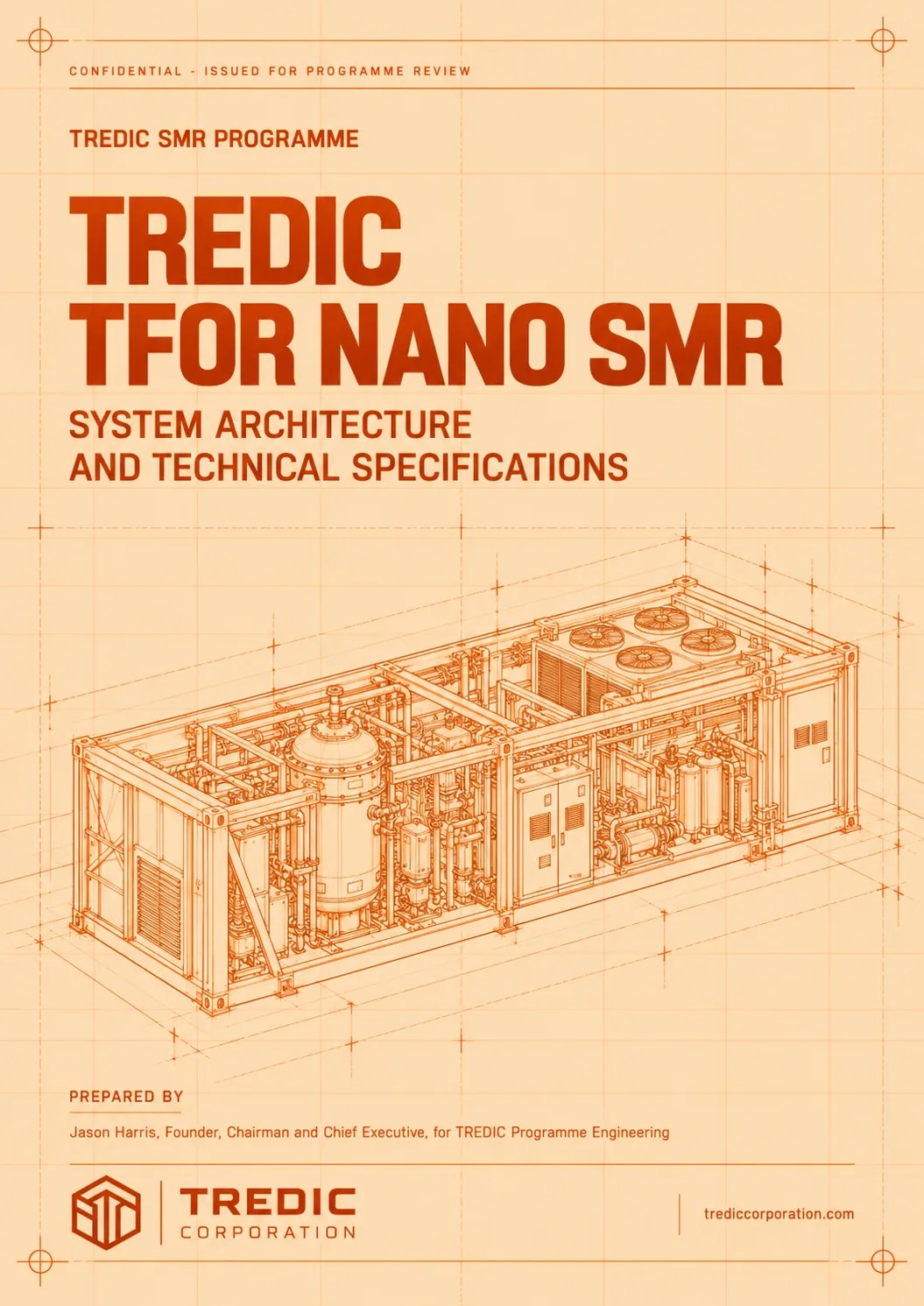 Transportable power concept · Three page previewTFOR NanoTREDIC-WP-TFOR-001 · TFOR Nano SMR technical specificationRead preview →
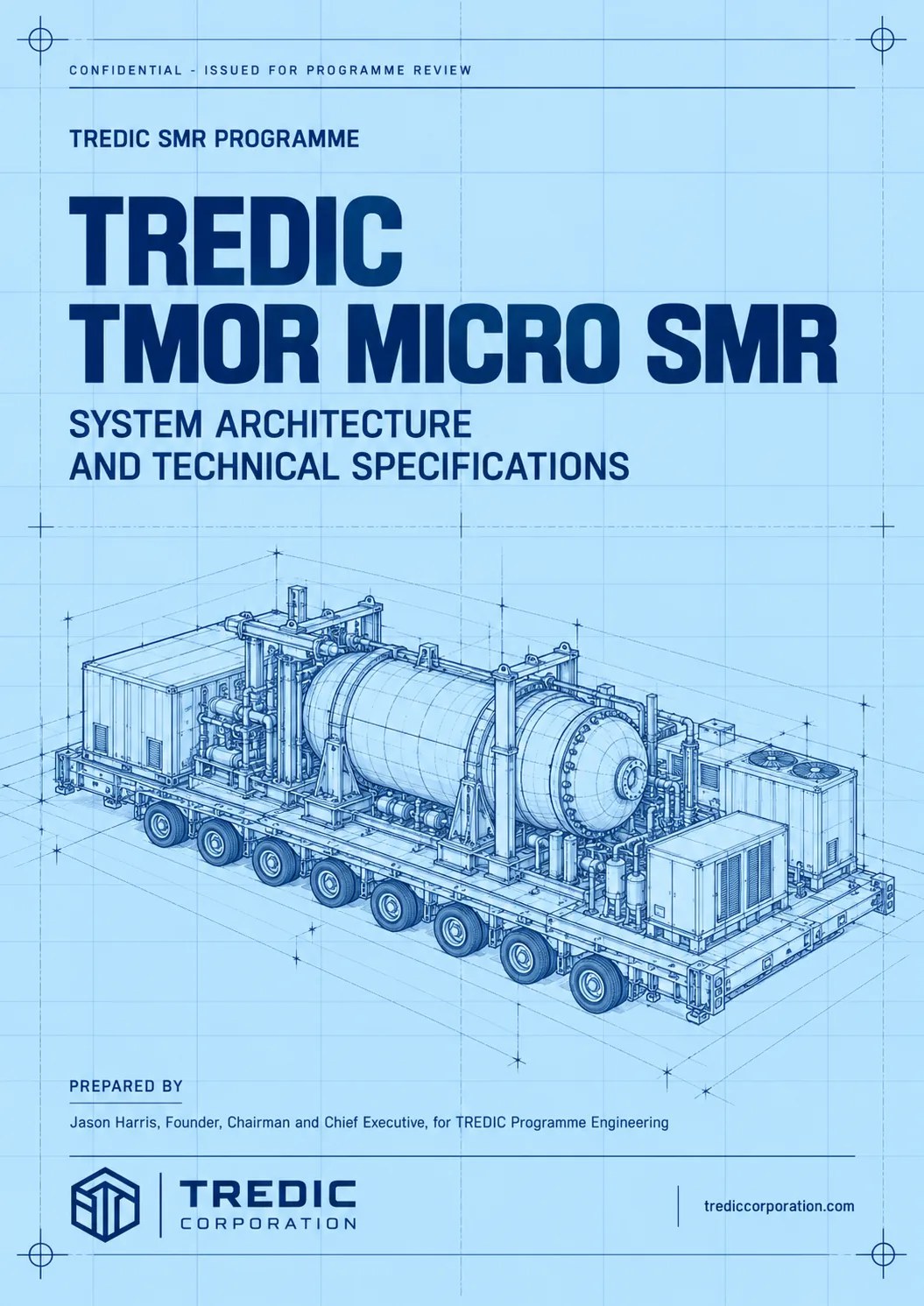 Remote and industrial power concept · Three page previewTMOR MicroTREDIC-WP-TMOR-001 · TMOR Micro SMR technical specificationRead preview →
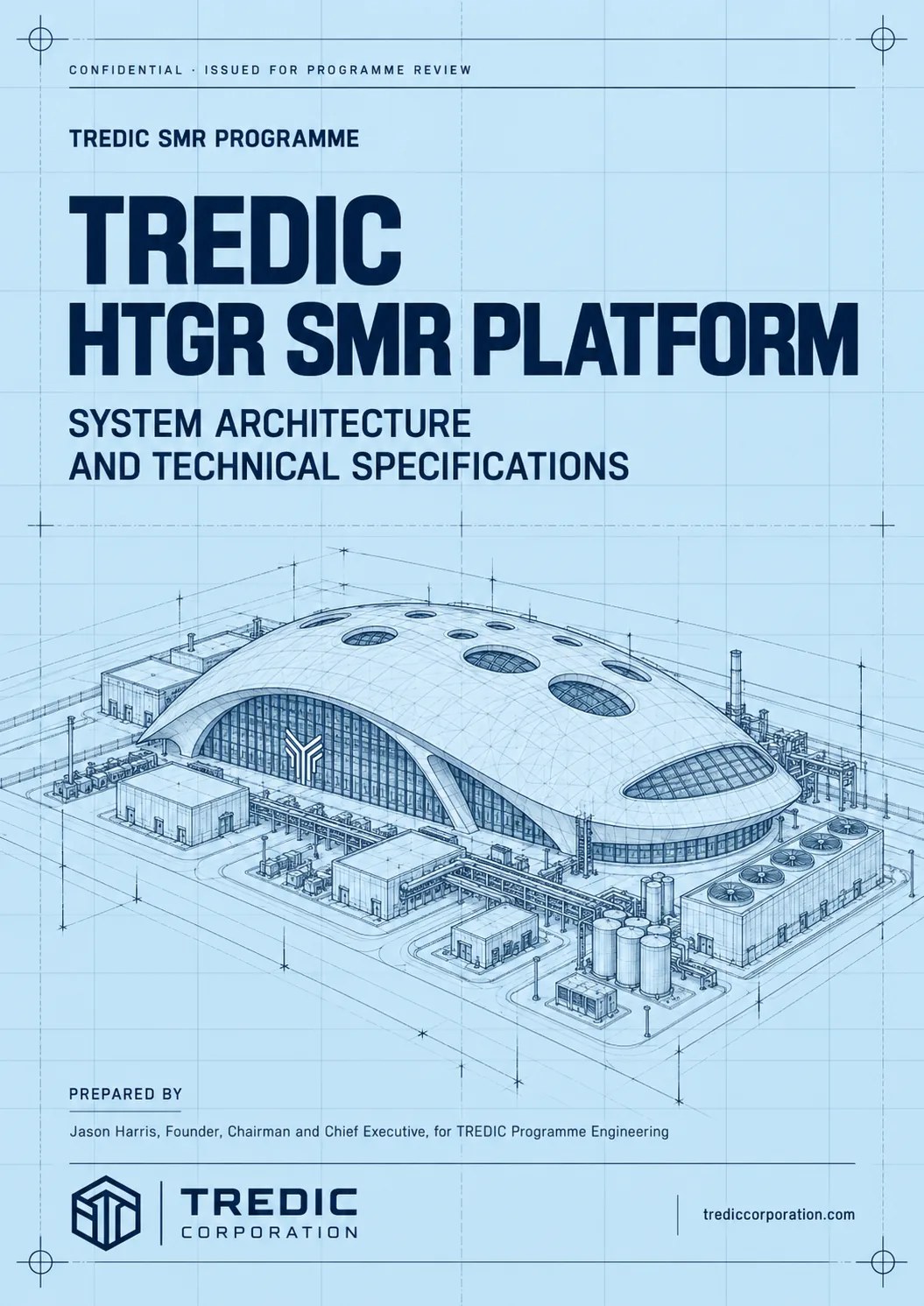 Modular generation family · Three page previewHTGR SMRTREDIC-WP-HTGR-001 · HTGR SMR technical specificationRead preview →
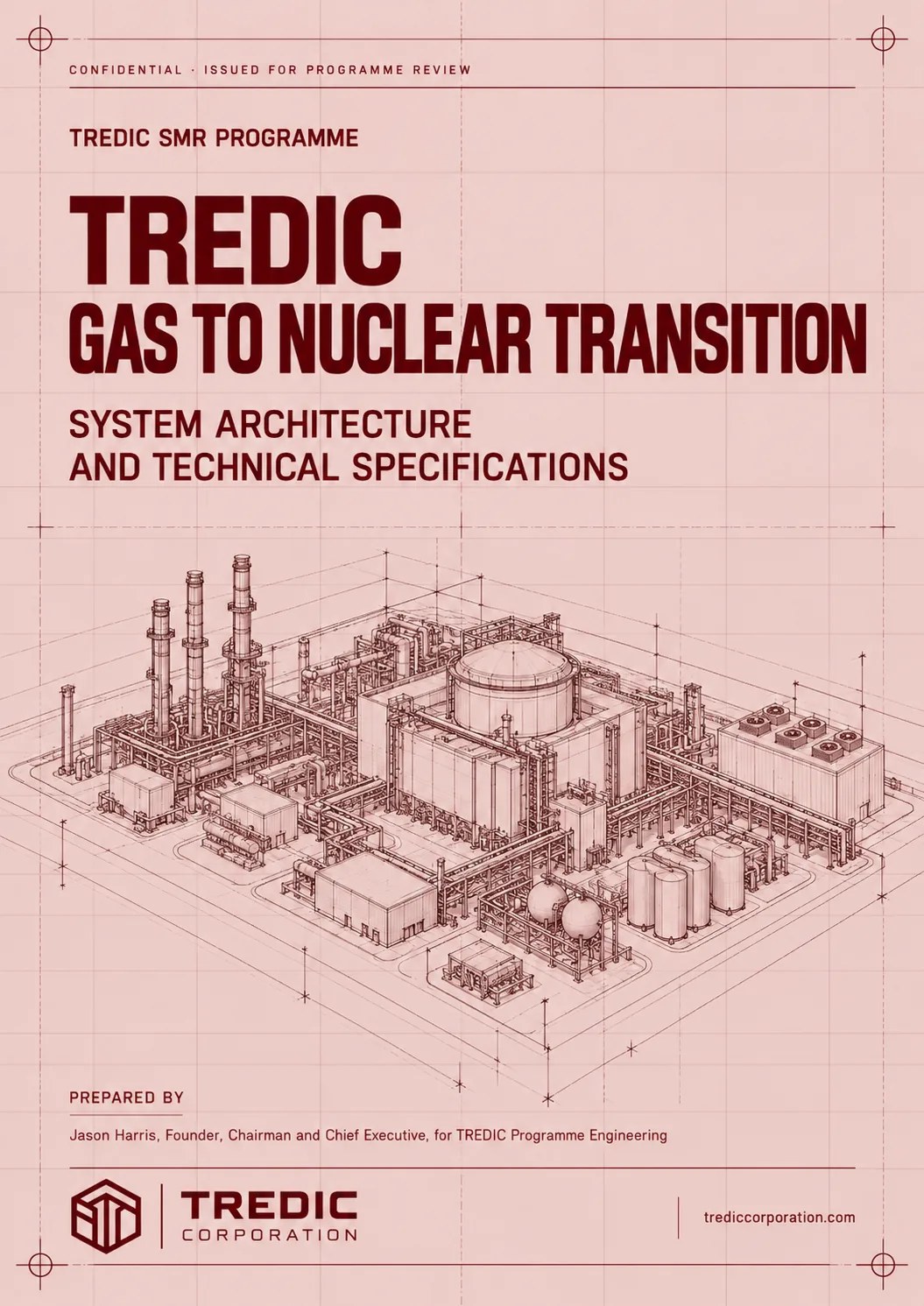 Transition architecture · Three page previewGas-to-NuclearTREDIC-PES-G2N-001 · Gas-to-Nuclear technical specificationRead preview →
 Research reference · Three page previewFusionTREDIC-PES-FUS-001 · Fusion SMR technical specificationRead preview →